
One of the things I respect most about Walt Disney is how little he cared about appearing reasonable.
He wasn’t reckless, and he wasn’t ignorant of cost or risk. He just refused to let those things lead. Vision came first. Everything else followed.
There’s a quote often credited to George Bernard Shaw that captures this well: “The reasonable man adapts himself to the world; the unreasonable one persists in trying to adapt the world to himself. Therefore all progress depends on the unreasonable man.”
When I think about unreasonable leadership, I think about Walt.
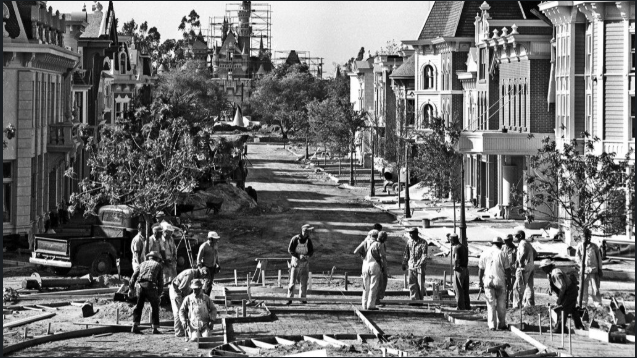
One of my favorite chapters of his story is the building of Disneyland. It’s filled with pursuits that many would have labeled unreasonable at the time, and it highlights what becomes possible when vision is allowed to lead.
Disneyland was completed in one year, just as Walt promised. To put that in perspective, it took about five months for experienced builders to construct my sister’s house—a cookie-cutter design they had already built hundreds of times. Disneyland was something entirely new. Nothing like it had ever been done before.
Engineers and builders were learning new math and physics as they went, figuring out how to make rides work safely, how to build machinery that didn’t yet exist, and how to design buildings and castles to appear larger than they actually were. In some cases, new building standards had to be created simply to support what was being imagined.
And they did it all in a year.
What stands out just as much as the speed is how the work was done. Many who worked on the park later described the experience as joyful. Some even said leaving at the end of the day felt like a burden because it pulled them away from work they genuinely loved.
That doesn’t happen because of dashboards or performance reviews.
It happens because people believe they are part of something that matters.
This is where I think modern leadership often loses its way. Metrics like KPIs and ROI have a role to play, but they are lag measures, not lead measures. They tell us what has already happened; they do not tell us what is worth building. Too often, they’re treated as the starting point rather than the result, and when that happens, they quietly cap what is possible.
During the building of Disneyland, financials weren’t ignored—but they weren’t in charge. Vision led. Measurement followed. Walt didn’t default to the cheaper option when it compromised the experience. He chose the $7,000 chandelier over the $700 one because authenticity mattered. He understood that some returns are delayed, indirect, and impossible to calculate in advance.
That wasn’t recklessness. It was clarity.
Leaders who equate control with leadership tend to stifle creativity and bottleneck progress. Control is often a response to fear—fear of waste, fear of failure, fear of being wrong. Vision, on the other hand, aligns people so clearly around a purpose that less control is required. When people understand why they are building something, they begin solving problems no metric could have predicted.
The men and women who built Disneyland weren’t disconnected from reality; they were oriented toward a future that didn’t exist yet. That orientation changed how they worked, how they solved problems, and how much of themselves they were willing to give.
Leaders should never underestimate the power of a clear, compelling vision—not just for their organizations, but for themselves. Vision expands what you believe is possible, and in doing so, it expands who you are willing to become.
It’s easier to manage what already exists than to lead toward something that doesn’t. But only one of those actually moves anything forward.
Featured image credit: The Walt Disney Company, “Building Disneyland: How the First Themed Park Was Created.”