
I was doing some personal study today when I read this:
“Lying, deceiving, reviling, and strife, these are the tools of people who want to control perception more than submit to truth. They use words not to reveal truth, but to manipulate, win, shame, or dominate.”
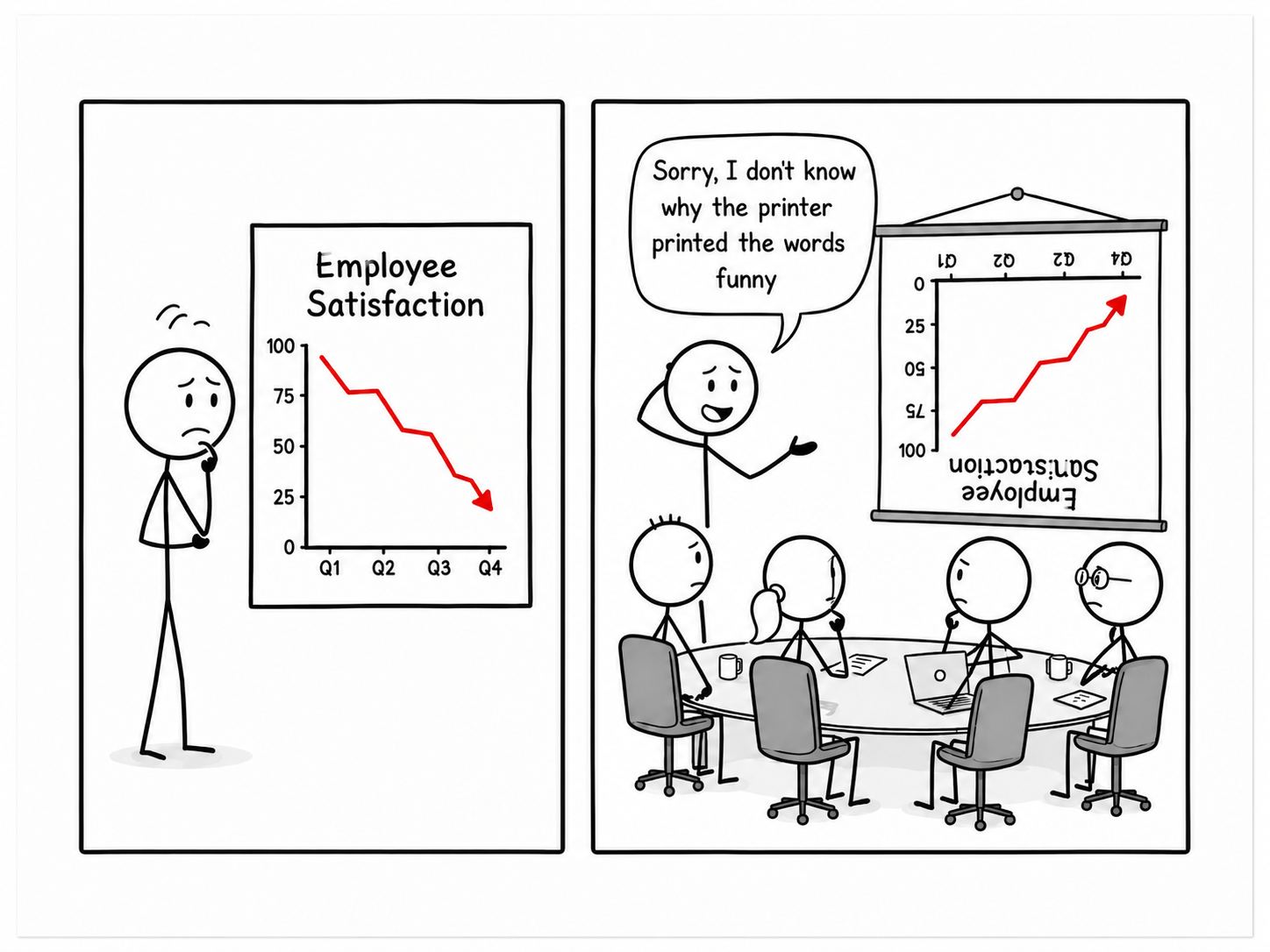
Immediately, I started reflecting on how these tools seem to be used a lot by leaders in companies, teams, departments, and organizations today.
Now, I am not saying that all leaders in business are corrupt or out for gain. I do not believe that. I think many leaders are trying to do the best they can with the pressure they are under. But I do think these tools get relied on when there is greater pressure to produce KPIs and other performance metrics than there is support for producing person-centered cultures where the measure of success is the growth of the people, not just the growth of the company.
The irony is that companies that prioritize their people and treat them as the work, not just as the workers producing the work, often see greater financial success than companies that prioritize chasing financial gains alone.
Don’t believe me? Look at the success of WD-40 under Garry Ridge when he was CEO, or Bob Chapman of Barry-Wehmiller. When these men entered their leadership roles, their respective companies were worth millions. By the time their leadership influence had fully taken shape, those companies had grown into billion-dollar organizations. And what makes that even more meaningful to me is that they did this while passing through some of the most difficult economic downturns in recent history. Ridge has said WD-40 never laid anyone off during his 25 years with the company. Chapman led Barry-Wehmiller through the Great Recession by choosing shared sacrifice over layoffs. They did not preserve the business by treating people as the first thing to cut. They chose culture. They chose shared sacrifice. They chose to see employees as human beings, not as resources reflected as a line on a spreadsheet.
Alright, so back to it.
If I am not saying leaders and managers are inherently evil, then why are so many of these tools being used to control perception rather than leaning into Truth? (Capital T intentional.)
From what I can conclude from my studying, it stems from companies that are not clear on their values, mission, and vision, or from companies that may have clear values, mission, and vision written somewhere, but behave in ways that are out of alignment with them.
When that happens, something fills the gap. And I think what often fills that gap is pressure to create a performance-based identity. Instead of showing up for the cause, people start showing up under pressure. Pressure to hit the number. Pressure to look successful. Pressure to outperform last quarter. Pressure to avoid bad optics. Pressure to maintain confidence. Pressure to keep people from panicking. Pressure to prove that leadership knows what it is doing.
That pressure is not always bad by itself. Businesses need to perform. Teams need goals. Organizations need metrics. There is nothing wrong with measuring progress.
The problem comes when the metric becomes the mission.
Simon Sinek does a beautiful job laying out the difference between finite games and infinite games. In finite games, the players are known, the rules are clear, and there is a definite winner and loser. In infinite games, the players come and go, the rules can change, and the objective is not to “win” in the traditional sense. The objective is to keep playing.
So, when a company is not clear on its purpose, when it does not know what it is trying to become, and when it does not have values that truly guide behavior, performance naturally becomes the organizing force. It becomes a lens that warps the way decisions are made, incentives are created, pressure is applied, identity is formed, and behavior is rewarded.
Unfortunately, it seems that money often becomes the determiner of whether performance is seen as winning or losing.
You hear things like:
“What will that cost us?”
“Did we outperform last quarter?”
“So-and-so’s numbers are down. If they do not get them up, we will have to make some changes.”
“Can we afford to tell people that right now?”
“How will this look?”
Money, money, money.
Again, I am not saying financial performance does not matter. It absolutely matters. A business that cannot sustain itself cannot serve its people, customers, patients, clients, or community for very long.
But money is easy to track, so it can quickly become the default scoreboard. Incentives begin to get structured around it. Pressure forms around it. Value starts to get tied to it. Before long, identity becomes rooted in performance outcomes. Employees start measuring their safety and worth by how their numbers compare to someone else’s. Leaders start measuring the value of their people by whether those people’s performance protects or threatens financial prosperity. At that point, work shifts from shared purpose to comparative worth. People are no longer only trying to do good work. They are trying to prove they are more valuable than the person next to them, and sometimes that means hiding their own faults by putting a spotlight on someone else’s.
And if my value is dependent on hitting an expectation set by someone else, what behaviors will I tend to implement in order to be “successful”?
That is where things can start to shift.
Instead of asking, “What is true?” leaders may begin asking, “How do we make this look okay?”
Instead of asking, “What do our values require here?” they may ask, “How do we avoid backlash?”
Instead of asking, “What do our people deserve to know?” they may ask, “How do we control the message?”
Instead of asking, “What can we learn from these results?” they may ask, “Who can we blame for these results?”
That is a very different kind of leadership.
And I do not think we can say this is the absolute cause of destructive leadership behavior, but I would argue it is a significant cause. When a company is more oriented around performance appearance than purpose, leaders become more tempted to manage perception. And when leaders manage perception, the tools become predictable.
Withholding. Spinning. Blaming. Shaming. Dominating. Manipulating. Silencing. Reviling. Creating strife.
Those tools may create short-term compliance, but they do not create trust. They may keep a meeting calm, but they do not create alignment. They may protect an image for a season, but they do not build a healthy culture. They may help leaders avoid discomfort, but they do not help people grow. That is the problem.
The results may not show up immediately. In fact, that is part of what makes this so dangerous. A leader may control perception and think it worked because people stayed quiet. Nobody pushed back. The meeting ended. The numbers held. The message was accepted.
But over time, something starts to erode.
People stop speaking honestly. They stop bringing concerns forward. They stop trusting the stated values. They start managing their own image. They tell leadership what they think leadership wants to hear. They protect themselves. They disengage quietly.
Culture does not usually fall apart all at once. It erodes through repeated moments where truth is avoided, softened, punished, or managed. That is why I think mission, vision, and values matter so much. Not as wall art. Not as a nice section on a website. Not as words that get pulled out during a retreat and then ignored when pressure comes. Mission, vision, and values matter because they orient behavior. Mission reminds us why we exist. Vision reminds us what we are trying to become. Values remind us what we refuse to sacrifice on the way there.
Without those anchors, pressure will eventually choose for us. The metric becomes the mission. The quarter becomes the vision. Image becomes the value. And once that happens, truth becomes negotiable.
But when leaders are clear on mission, vision, and values, the dynamic changes. Results become information instead of identity. A miss becomes something to learn from instead of something to hide. A hard conversation becomes an opportunity to clarify alignment instead of a threat to avoid. A mistake becomes part of mastery instead of evidence of worthlessness. Pressure becomes a test of values instead of an excuse to abandon them.
Think about how that would change the dynamic inside a workplace. If the goal is only to win, then people will eventually be tempted to do whatever helps them win. But if the goal is to become something meaningful, then both wins and losses can teach. Highs and lows become milestones. Results become feedback. People become more than their numbers. Leadership becomes more than image management. That is the difference between a culture chasing performance and a culture pursuing mastery.
A performance-obsessed culture asks, “Did we hit the number?” A mastery-oriented culture asks, “What are we becoming, and what are these results teaching us?” Those are not the same question. And they will not produce the same culture.
I think leaders today need to take this seriously. Not because KPIs are bad. Not because performance does not matter. Not because businesses should stop caring about financial outcomes. But because when performance becomes disconnected from purpose, people become vulnerable to being used. And when people feel used, trust erodes.
Leaders establish culture by what they consistently model, permit, protect, reward, correct, and remove. If leaders reward perception management, they should not be surprised when people learn to manage perception. If leaders punish honesty, they should not be surprised when people stop telling the truth. If leaders protect numbers while sacrificing people, they should not be surprised when culture becomes cynical.
The deeper question for leaders is not simply, “Are we winning?”
The deeper question is, “What are we becoming as we try to win?”
Because if winning requires us to lie, deceive, shame, dominate, manipulate, or create strife, then what we are really building is not leadership. It is a culture of self-protection. And cultures of self-protection cannot produce real trust.
Truth-centered leadership does not mean saying everything without wisdom. It does not mean reckless transparency. It does not mean being harsh, blunt, or careless.
It means leaders use communication to reveal reality, not hide it.
It means people are treated like adults.
It means values are followed, permitted, and corrected consistently.
It means leaders tell the truth as soon as they responsibly can.
It means hard decisions are communicated with dignity.
It means feedback is not punished simply because it is uncomfortable.
It means the stated values and the lived behaviors match.
That is the kind of leadership I think more workplaces need.
Because perception control may create compliance for a season, but it cannot create trust.
Only Truth can do that.